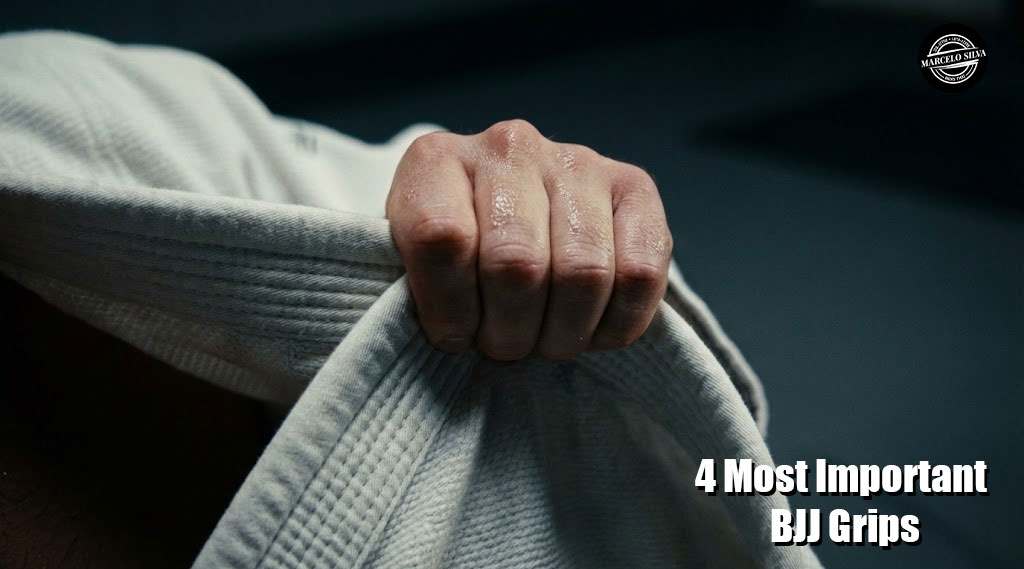
“The Unseen War”: 4 Most Important BJJ Grips That Will Change Your Game (Gi & No-Gi)
If you are a white belt just starting your journey in Brazilian Jiu-Jitsu, you are likely obsessed with the finish. You dream of the perfect Armbar or the tightest Triangle Choke.
Yet, when you step onto the mats, you often find yourself completely neutralized. You can’t launch an attack, and you feel like a puppet on a string. You wonder, “Why do high-level belts seem to know my every move before I make it?”
The “Unseen War” The answer isn’t in the submission; it lies in the battle that happened five minutes earlier. While beginners fight for submissions, experts fight for grips.
This is the “Unseen War.”
The Thesis: This article is your complete guide to winning that war. We will dive deep into the 4 most important grips in BJJ (covering both Gi and No-Gi) that form the foundation of all control, defense, and offense.
As a premier academy at BJJ Bangkok, we teach that understanding grips is the single fastest shortcut to mastery. It is a core tenet of the Marcelo Silva Martial Arts philosophy: maximize efficiency through superior control.
Part 1: The Philosophy of the Grip – Why Grip Fighting Is BJJ
-
The Formula for Victory: Grips ➡️ Control ➡️ Submission
You cannot submit an opponent you do not control. And you cannot control an opponent you are not holding.
Grips are the “handles” you use to manipulate the fight.
-
Dominant Grips lead to control over your opponent’s Posture.
-
Controlling Posture leads to breaking their Structure and Balance.
-
Breaking Structure creates the opening for the Submission.
The Great Divide: Gi vs. No-Gi
To master the grip game, you must understand the environment.
-
The Gi: A fight based on friction and static control. You grab the fabric of the Keikogi (Wikipedia), which slows the game down and allows for highly technical leverage.
-
No-Gi: A fight based on body locks and dynamic control. With no fabric to grab, you must control joints and space. The game is faster and more slippery.
Understanding this difference is key to mastering the four grips below.
-
Part 2: The Gi Masters – Your "Steering Wheel" and "Chains"
In the Gi, two grips reign supreme. They are often used together to form the classic “Collar-Sleeve” guard, a staple in Judo (Wikipedia) and BJJ.
Gi Grip #1: The Collar Grip (The “Steering Wheel”)
What is it? A grip on the opponent’s lapel or collar, either cross-collar (opposite side) or same-side.
Why it’s Dominant: “Where the head goes, the body follows.” The collar grip provides direct control over the opponent’s spine. It acts as a “steering wheel,” allowing you to pull their head down to break their posture. An opponent with a broken posture is anatomically unable to generate power.
Application:
-
Offense: It is the primary setup for the Cross-Collar Choke and Loop Choke.
-
Defense: In Spider Guard, it anchors the opponent down, preventing them from posturing up to pass.
Gi Grip #2: The Sleeve Grip (The “Chains”)
What is it? A grip on the cuff of the opponent’s sleeve. The most common variations are the Pistol Grip (holding the fabric like a handle) or the Pocket Grip (folding the cuff).
Why it’s Dominant: Your opponent’s hands are their weapons. They use them to post, frame, and attack. Controlling the sleeve is like putting handcuffs on them. If you control the end of the lever (the wrist), you control the entire arm.
Application:
-
The Combo: Combine a Sleeve Grip with a Collar Grip to enter the high-percentage world of Collar-Sleeve Guard.
-
The Setup: It is the starting point for the Triangle Choke and Omoplata.
Part 3: The No-Gi Essentials – Your "Wedges" and "Clamps"
Without the Gi, you cannot rely on friction. You must rely on mechanical wedges.
No-Gi Grip #3: The Underhook (The “King of No-Gi”)
What is it? Driving your arm underneath your opponent’s armpit to control their shoulder girdle.
Why it’s Dominant: In the world of Wrestling (Wikipedia) and No-Gi Grappling, the phrase holds true: “He who wins the underhook, wins the exchange.” The underhook allows you to occupy the space inside your opponent’s defense. It gives you a route to their back and prevents them from crushing you.
Application:
-
Escapes: It is the “Golden Ticket” out of bottom Side Control.
-
Takedowns: It is essential for Knee Taps and Snap Downs.
No-Gi Grip #4: The “C-Grip” / Cupping Grip (The “Joint Killer”)
What is it? Forming a “C” shape with your hand (thumb opposing fingers) to cup a joint—usually the wrist, neck, or ankle.
Why it’s Dominant: Since you cannot grab clothing, the C-Grip is the strongest way to manipulate a limb. It allows for instant transitions between pushing and pulling.
Application:
-
Head Control: Used by legends like Marcelo Garcia (BJJ Heroes) to snap the head down for Guillotines.
-
Wrist Control: Essential for defending chokes or setting up Arm Drags.
Part 4: How to Win "The Unseen War"
Knowing the grips is step one. Winning the fight for them is step two.
3 Golden Rules of Grip Fighting
-
Grip with Purpose: Never just hold on. If a grip isn’t actively helping you attack or defend, let it go and find a better one.
-
Break Grips Immediately: The moment your opponent grabs your collar, you are in danger. Address the grip immediately. Do not accept their control.
-
Use Your Whole Body: Do not try to break a grip using only your fingers. Use your hips, your legs, and explosive rotation to snap their control.
The Marcelo Silva Martial Art Philosophy
At BJJ Bangkok, our curriculum is built on the Marcelo Silva Martial Art philosophy. We don’t just teach you 100 random moves. We teach you the concepts of control.
We believe that Grip Dominance = Fight Dominance. In our classes, we utilize Positional Sparring where the only goal is to win the grip fight. This helps students internalize these concepts before they even attempt a submission.
Conclusion: The Real Winner
The “Unseen War” is the battle that decides the winner long before the tap occurs.
By mastering the Collar Grip, Sleeve Grip, Underhook, and C-Grip, you stop playing checkers and start playing chess. You shift your focus from “hunting for lucky submissions” to “systematically dismantling your opponent.”
Ready to upgrade your game? At BJJBKK, we don’t just teach you how to fight; we teach you how to think. Visit us at BJJ Bangkok to start your journey and experience the difference of a conceptual approach to Jiu-Jitsu.
Frequently Asked Questions (FAQ)
Q1: Why are grips so important in BJJ? A: Grips represent control. You cannot sweep, pass, or submit an opponent you do not control. The grip fight determines who is driving the car and who is just a passenger.
Q2: Can I grip inside the sleeve or pant leg? A: No. Under IBJJF Rules, putting your fingers inside the cuff is illegal because it creates a high risk of breaking your fingers if the opponent moves suddenly. You must grip the fabric from the outside.
Q3: How do I improve my grip strength? A: While tools like hand grippers help, the best way is to train BJJ. “Dead Hangs” (hanging from a pull-up bar) and “Towel Pull-ups” are also excellent specific exercises. However, technique is more important than raw strength.
Q4: What is the Marcelo Silva Martial Art philosophy on grips? A: We view grips as “tools of efficiency.” A proper grip allows a smaller person to control a larger person by breaking their posture. We emphasize active gripping—using the grip to constantly off-balance the opponent.
Q5: Should I train grip fighting specifically? A: Absolutely. We recommend dedicating the first minute of every sparring round to “hand fighting” only. Do not attack submissions; just fight for the dominant grip. This will revolutionize your game.
Training Brazilian Jiu Jitsu in Bangkok offers not just physical benefits, but mental and social rewards as well. Avoiding these common beginner mistakes will help you build a solid foundation and enjoy the long-term benefits of BJJ.
At BrazilianJiuJitsuBKK.com, we welcome students of all levels. Our experienced instructors, international community, and central Bangkok location make us the ideal place to begin or continue your Brazilian Jiu Jitsu journey.

 English
  ไทย
ไทย