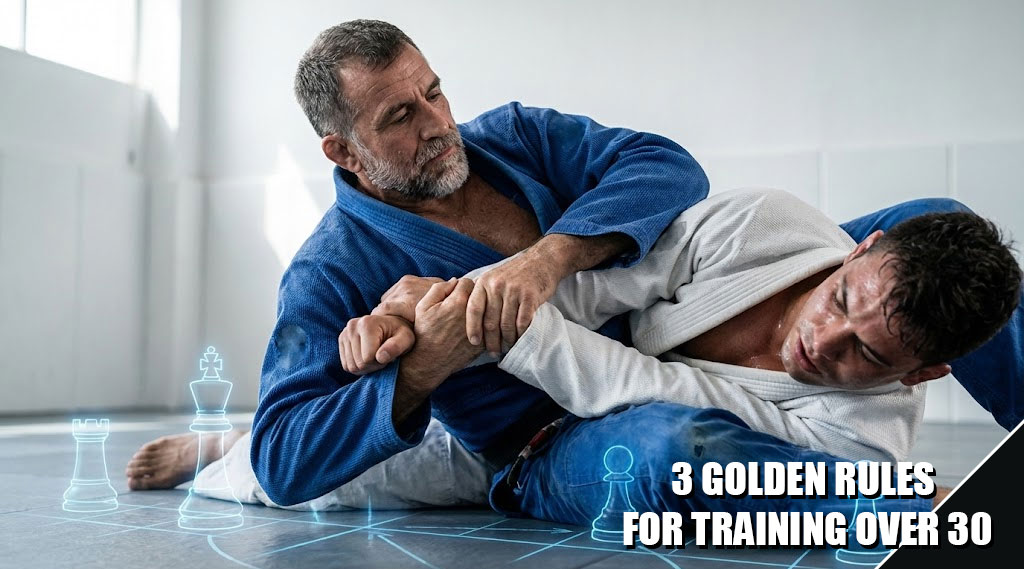
“BJJ for Life”: 3 Golden Rules for Training Over 30 Without Injury
Do you remember being 20?
You could play sports all day, crash into things, and wake up the next morning feeling brand new. But now, as the clock ticks past 30 (or 40, or 50), things have changed. Your back is a little stiffer in the morning. Your recovery takes a little longer.
For many professionals considering Brazilian Jiu-Jitsu at this age, the #1 fear isn’t “losing a fight.” It’s “getting injured and missing work.”
The Good News: BJJ is one of the few Martial Arts (Wikipedia) you can practice well into your 70s—if you know how. This is the concept of “BJJ for Life.”
This article draws from the real experience of instructors at BJJ Bangkok under the Marcelo Silva Martial Arts philosophy. We are revealing the 3 Golden Rules to turn you from a “broken warrior” into a “sustainable martial artist.”
The Reality Check (Biology & Lifestyle)
Before we get to the rules, we must accept the biological truth.
-
Slower Recovery: Your tendons and joints aren’t brand new rubber bands anymore. Inflammation lingers longer.
-
Responsibilities: You aren’t just a student. You have a career, a family, and a mortgage. An injury isn’t just physical pain; it’s a financial liability.
Therefore, the goal of BJJ over 30 is not “winning every round.” It is “being able to come back tomorrow.” Consistency trumps intensity.
Rule #1 - Choose Your Partners Wisely (Survival Skill)
Over 30, your biggest enemy isn’t the skilled Black Belt. It is the 20-year-old, athletic, “Spazzy White Belt” who treats every roll like the World Jiu-Jitsu Championship.
These partners move unpredictably. They throw accidental elbows. They prioritize speed over safety. They are high-risk.
The Art of Saying “No”
At BJJ Bangkok, we teach that you have the right to decline a roll. It is not rude; it is smart.
-
Seek Higher Belts: A purple or brown belt has the control to submit you without hurting you.
-
Seek Controlled Partners: Find people who match your flow and respect safety.
The Marcelo Silva Philosophy: Safety is paramount. Training with respectful partners accelerates learning far more than a death-match.
Rule #2 - Efficiency & Defense Over Speed & Power
Don’t Race a Ferrari with a Sedan
If you are 45 trying to match the explosive speed of a 22-year-old… you’ve already lost. You cannot win on athleticism. You must win on Timing and Structure.
Develop the “Old Man Game”
This isn’t an insult; it’s the highest form of Jiu-Jitsu. This style focuses on:
-
Pressure: Using dead weight and gravity instead of muscle contraction.
-
Frames: Using bone structure to support weight instead of pushing.
-
Tightness: Keeping elbows and knees connected to avoid wild scrambles.
Sustainability via Marcelo Silva Martial Art
The Marcelo Silva Martial Arts curriculum is designed for this. We teach Leverage (Wikipedia) to defeat strength. When you train this way, your body doesn’t take damage. You get better with age because your technique deepens, even as your speed declines.
Rule #3 - Tap Early, Tap Often (Leave Ego at the Door)
Ego Causes Injuries
You are caught in an Armbar. You refuse to tap because you don’t want to “lose” to the new guy. Snap. There goes your elbow and 3 months of training.
Is it worth it? Never.
Tapping is Learning
Over 30, a “tap” just means, “You got me, let’s reset.”
-
Tap when you feel “tight,” not when you feel “pain.”
-
Pain means damage has already occurred.
-
Preserving your body for tomorrow is the real victory.
Recovery is Training
Sleep, Hydration, and Physical Therapy or stretching are non-negotiable parts of your routine. At BJJ Bangkok, we encourage active recovery.
Conclusion: The Infinite Journey
Brazilian Jiu-Jitsu is a marathon, not a sprint. By following these “BJJ for Life” rules, you realize age is just a number.
You might not become a world champion at 40, but you will become the “best version of yourself”—strong, confident, and skilled.
If you are looking for a gym that understands the needs of working professionals—a place that prioritizes safety, technique, and a quality community—BJJ Bangkok under the Marcelo Silva Martial Art standard is your home.
“Don’t train to be good just for today. Train to be good for a lifetime.”
Frequently Asked Questions (FAQ)
Q1: Is 40 or 50 too old to start BJJ? A: Never! Many people start later in life and earn black belts in their 60s. BJJ relies on technique, making it perfect for older adults. Just start slow and smart.
Q2: How do I prevent back/knee pain? A: Proper warm-ups, cool-downs, and selecting a game style that doesn’t require extreme flexibility (like Half Guard). Strength training off the mats is also crucial to support your joints.
Q3: How many days a week should I train over 30? A: For beginners, 2-3 times a week is optimal. Rest days are essential for recovery. Consistency beats intensity.
Q4: Why is Marcelo Silva Martial Art good for professionals? A: The Marcelo Silva Martial Arts system prioritizes “Efficiency.” We cut out high-risk, energy-wasting moves and focus on what works safely and sustainably.
Q5: Can I train with prior injuries? A: Yes, but inform your BJJ Bangkok coach. We can offer modifications to techniques to work around your limitations.
Q6: Does BJJ help with work stress? A: Incredibly well. It’s “Active Meditation.” The focus required on the mats forces you to disconnect from work stress completely.
Training Brazilian Jiu Jitsu in Bangkok offers not just physical benefits, but mental and social rewards as well. Avoiding these common beginner mistakes will help you build a solid foundation and enjoy the long-term benefits of BJJ.
At BrazilianJiuJitsuBKK.com, we welcome students of all levels. Our experienced instructors, international community, and central Bangkok location make us the ideal place to begin or continue your Brazilian Jiu Jitsu journey.

 English
  ไทย
ไทย