
Center of Mass Invasion: Unlocking K-Guard Dynamics to Neutralize Heavy Pressure Passers | BJJ Bangkok
In the modern competitive grappling landscape of 2026, top-position pressure passing has reached an unprecedented level of efficiency. High-level competitors across global tournament circuits routinely deploy low-plane passing systems—such as heavy Body Locks, Over-Under pass variations, and crushing Double Under stacks—designed specifically to flatten the bottom player’s spine and eliminate interior space.
For bottom players, attempting to stop this crushing momentum by pushing back directly with upper body strength is a failing strategy.
The modern solution relies on changing the spatial plane entirely. Rather than resisting downward force, elite bottom players utilize the K-Guard framework to invade the passer’s Center of Mass directly beneath their hips.
By establishing an angled K-Guard structure in Brazilian Jiu-Jitsu, you convert an opponent’s forward pressure into rotational momentum. At Marcelo Silva Martial Art, we teach athletes how to turn top compression into immediate back takes and leg entanglements, giving grapplers across BJJ Bangkok a complete tactical advantage over heavier opponents.
The Physics of Pressure: Why Traditional Guard Recovery Fails Under Heavy Load
When a heavy pressure passer seals their chest against your torso, they pin your pelvic structure directly to the mat. According to core principles of human Anatomy and structural Biomechanics, immobilizing the lumbar spine eliminates your ability to rotate your hips, effectively disabling traditional guard attacks like Triangle Chokes or Armbars from Closed Guard.
[Top Passer's Forward Pressure] ➔ [Chest-to-Torso Compression] ➔ [Lumbar Spine Immobilization]
Sports science research indicates that grapplers who attempt to push back against a heavy low-plane pressure pass typically burn up to 40% more energy within the first three minutes of a match compared to those who adjust their angle.
Instead of fighting directly against this downward load, modern Grappling strategy dictates slipping underneath the passer’s base to disrupt their balance.
Rotational Dynamics: Invading the Center of Mass with K-Guard
The primary objective of K-Guard is shifting your body from a flat, vulnerable position onto a 90-degree lateral side-angle. From this lateral alignment, you scoop your arm deeply beneath the far knee pit of the top passer while extending your top leg across their hip line or chest.
Applying functional principles from Sports science, this position creates a three-point mechanical structure:
The Far-Leg Post: Your underscooping arm locks onto the far knee joint, preventing the passer from stepping backward to disengage.
The Upper Chest Frame: Your top leg acts as a diagonal barrier, keeping the passer’s upper torso from collapsing directly onto your chest.
Under-Hip Elevation: Your lower leg hooks behind their lead thigh, allowing you to elevate their hips and invade their center of mass.
By turning your hips sideways, smaller fighters at Marcelo Silva Martial Art can easily lift and redirect opponents who weigh significantly more, neutralizing forward pressure without burning muscle stamina.
Systemic Performance Matrix: Flat Guard Resistance vs. K-Guard Center-of-Mass Invasion
To help analytical practitioners evaluate their technical development, this matrix contrasts traditional flat-guard recovery against our advanced K-Guard system dynamics:
| Performance & Mechanical Variable | Traditional Flat Guard Resistance | K-Guard Center-of-Mass Invasion System | Long-Term Advantage Within BJJ Bangkok |
| Spinal Load & Pressure Strain | High (spine flattened directly against the mat) | Low (hips turned 90 degrees on a lateral angle) | Minimizes spinal compression and prevents physical exhaustion |
| Off-Balancing (Kuzushi) Potential | Limited (requires significant arm strength under load) | High (uses rotational momentum underneath the hips) | Enables smaller fighters to unbalance heavier opponents |
| Counter-Attack Versatility | Restricted to basic hip-clamp sweeps or escapes | Direct entries to Back Takes and Leg Entanglements | Keeps continuous offensive pressure on top-position passers |
| Efficacy Against Body Lock Passes | Poor (torso easily pinned and immobilized) | High (strips chest contact and redirects forward weight) | Neutralizes low-plane pressure passing systems completely |
| Academy Training Integration | High strain on neck and lower back muscles | Step-by-step hip mobility progressions with certified coaches | Protects joint health and promotes long-term athletic longevity |
Tactical Execution: Transitioning from K-Guard to the Matrix Spin and Leg Locks
Once you establish a clean K-Guard frame, the top passer is trapped in a dilemma. If they continue driving forward, their weight falls into empty space over your head; if they pull back, their lead leg remains completely isolated. This opens up two primary offensive transitions:
Path A: The Matrix Back Take (Inversion Geometry)
As the passer drives forward, you use your upper leg hook to pull yourself beneath their hips while inverting onto your upper back. This “Matrix” spin allows you to climb straight onto the passer’s back, securing a Rear Naked Choke position from what began as a defensive guard scenario.
Path B: Lower Limb Entanglements (Ashi Garami)
If the passer backs away to protect their back, their far leg remains exposed. By extending your lower leg through their legs, you can instantly transition into Ashi Garami, the Saddle, or 50/50 guard positions, setting up immediate submission attacks like Heel Hooks or Straight Ankle Locks in both Gi and No-Gi formats.
Comprehensive Brazilian Jiu-Jitsu Technical Growth at Marcelo Silva Martial Art
Developing an unpassable guard requires more than memorizing individual techniques; it demands a deep understanding of spatial awareness, leverage angles, and biomechanics. At Marcelo Silva Martial Art, our technical curriculum is continuously updated to reflect modern tournament developments across international combat sports.
We integrate proven tactical principles from across various Martial arts—including distance management from Muay Thai and wall control from Mixed martial arts (MMA)—into our core ground game. Our expert black belt instructors guide practitioners through every step of the K-Guard system, ensuring every student in BJJ Bangkok can execute these modern techniques safely and effectively.
Conclusion: Master the Modern Bottom Game in Bangkok
Struggling against heavy pressure passers is rarely caused by a lack of physical strength or heart; it simply stems from trying to fight downward force at a flat angle. By adopting the K-Guard center-of-mass system, you can turn an opponent’s top weight into your greatest offensive advantage.
Upgrade your grappling skills with world-class instruction in Thailand. Learn how to manage weight, protect your spine, and execute high-level back takes in a professional, highly technical environment.
Step onto the mats at Marcelo Silva Martial Art today. View our full training schedule and reserve your introductory trial session through our central digital network at brazilianjiujitsubkk.com.
Frequently Asked Questions (FAQ)
Q1: How does K-Guard invade the passer’s Center of Mass during a match?
A: K-Guard turns your body 90 degrees sideways, allowing you to scoop under the passer’s far knee pit while placing your lower leg behind their lead thigh. This mechanical structure allows you to slide directly underneath their hips and unbalance them at Marcelo Silva Martial Art.
Q2: Why is turning sideways better than staying flat on your back against a pressure passer?
A: Staying flat on your back allows a heavy passer to compress your lumbar spine and pin your hips. Turning 90 degrees sideways keeps your spine mobile, protects your lungs, and allows you to use your leg levers effectively across BJJ Bangkok.
Q3: Can grapplers who are not naturally flexible execute the Matrix Back Take safely?
A: Yes. The Matrix Back Take relies on hip rotation and momentum rather than extreme spinal flexibility. At Marcelo Silva Martial Art, we teach safe hip-mobility progressions that allow practitioners of all body types to perform this entry without placing strain on the neck.
Q4: What happens if the top passer backs away while I am in K-Guard?
A: If the passer backs away to avoid a back take, their lead leg is left exposed. This allows you to immediately transition your legs into Ashi Garami or 50/50 positions to execute high-percentage leg locks like heel hooks and ankle locks.
Q5: Is K-Guard legal and effective in both Gi and No-Gi competition formats?
A: Yes, K-Guard is exceptionally effective in both Gi and No-Gi BJJ. Because it relies on controlling the far knee pit with your arm rather than gripping fabric, the mechanics remain virtually identical regardless of uniform.
Q6: How do I sign up for a technical trial or competition class in Bangkok?
A: You can view class schedules, learn about our coaching staff, and book an introductory session directly through our primary digital portal at brazilianjiujitsubkk.com.
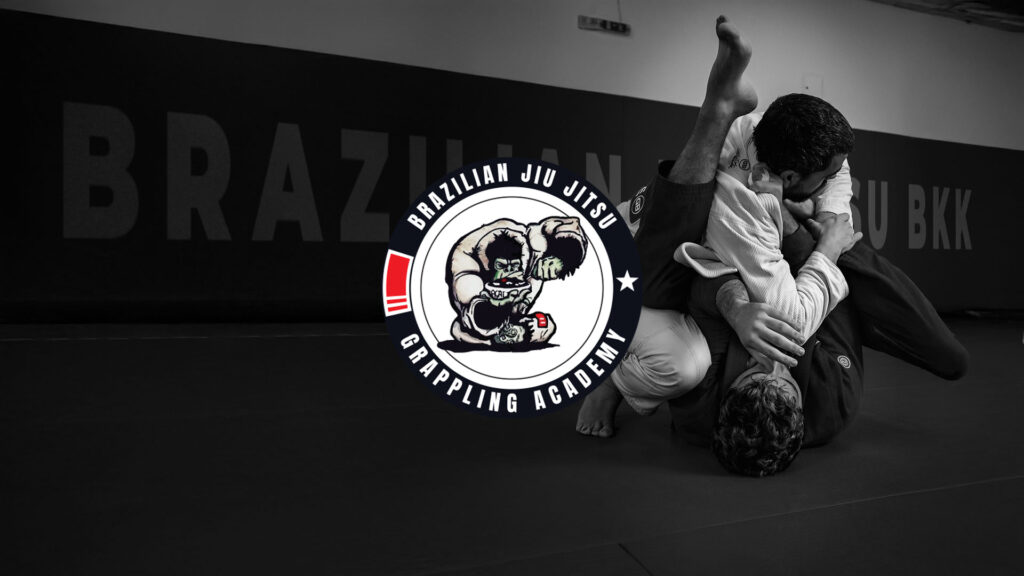
Training Brazilian Jiu Jitsu in Bangkok offers not just physical benefits, but mental and social rewards as well. Avoiding these common beginner mistakes will help you build a solid foundation and enjoy the long-term benefits of BJJ.
At BrazilianJiuJitsuBKK.com, we welcome students of all levels. Our experienced instructors, international community, and central Bangkok location make us the ideal place to begin or continue your Brazilian Jiu Jitsu journey.


 English
  ไทย
ไทย