Muay Thai: The RWS 2026 Expansion and Nabil Anane’s Boxing Footwork Evolution | BJJ Bangkok
The combat sports ecosystem is experiencing a massive evolutionary leap as the final quarter of 2026 approaches. Rajadamnern World Series (RWS) is aggressively expanding its operations, finalizing plans to host large-scale, off-site arena events. Simultaneously, global combat media is closely analyzing Nabil Anane’s training regimen as he prepares for the 2028 Olympic boxing qualifiers with the full backing of ONE Championship.
These major industry developments provide a unique window into the business of sport tourism and the intricate biomechanics of elite striking. Understanding how global promotions scale their events and how world-class athletes recalibrate their kinetic chains provides essential knowledge for any martial artist aiming to improve their combat intelligence.
1. The RWS Expansion: Redefining Sport Tourism
The decision by RWS to expand beyond the historic confines of the Rajadamnern Stadium signals a new era for martial arts entertainment in Thailand. Moving toward massive off-site arenas is a strategic response to the exponential growth of international sport tourism.
Venue Capacity and Accessibility: Shifting to larger, modernized arenas allows organizers to meet the surging demand from international fans traveling specifically for premium combat sports events.
Production Value: Open arenas provide the infrastructure required for world-class lighting, acoustics, and live broadcast technologies, creating a stadium-level spectacle that appeals to a global television audience.
Cross-Promotional Opportunities: Larger venues attract elite international athletes, elevating the competitive landscape and cementing Thailand as the ultimate destination for striking supremacy.
2. The Biomechanics of Nabil Anane’s Olympic Adaptation
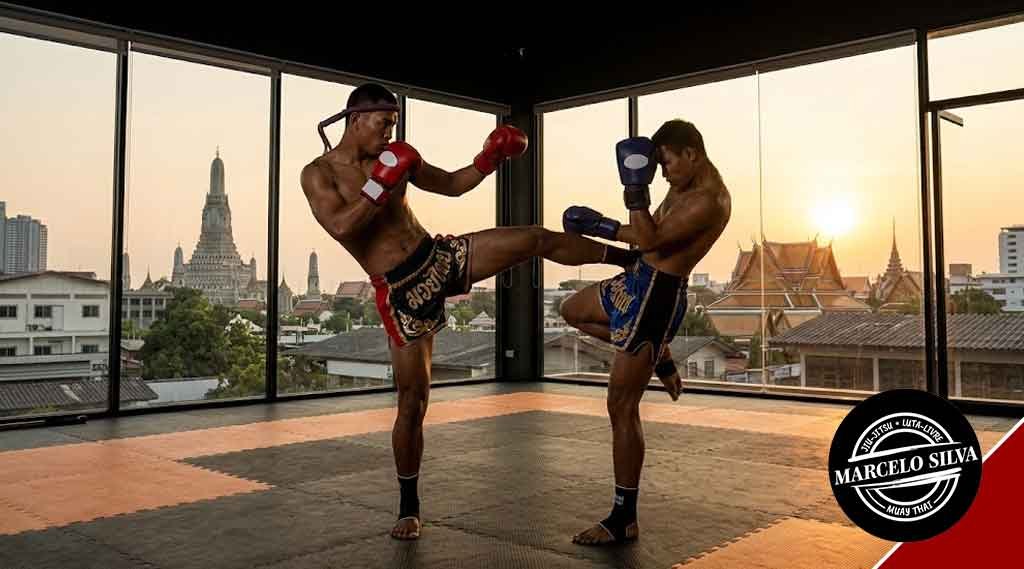
Transitioning from elite Muay Thai to Olympic-level amateur Boxing requires an absolute reconstruction of an athlete’s footwork and balance. Nabil Anane possesses an immense height and reach advantage, but utilizing that frame effectively in a boxing ring requires abandoning traditional eight-limb stances.
In traditional Thai striking, competitors place a heavy emphasis on a narrow, rear-leg-heavy stance to facilitate quick checks against incoming low kicks. To succeed in boxing, the kinetic chain must be fundamentally altered:
The Pendulum Step: Boxing relies on dynamic weight shifting. By utilizing a pendulum rhythm on the balls of the feet, a fighter can rapidly close the distance for a linear jab and immediately exit to a safe range.
Lateral Angle Creation: Moving in straight lines is highly predictable. By stepping off the centerline at 45-degree angles, a fighter neutralizes an aggressive opponent’s forward pressure and creates dominant angles for counter-punching.
Center of Mass Adjustment: Dropping the hips and lowering the center of gravity increases the ground reaction force. This structural adjustment transfers maximum kinetic energy from the floor directly into straight punches.
Applying Boxing Footwork to Grappling Defense
The agile, lateral footwork heavily utilized in amateur boxing translates flawlessly into takedown defense for Mixed martial arts and submission grappling. When a grappler attempts a linear takedown, standing static guarantees a successful entry for the attacker.
Executing a 45-degree lateral pivot removes the defending fighter from the direct path of a double-leg or single-leg takedown. As the attacker’s forward momentum carries them past the centerline, the defender gains a structural advantage.
This precise footwork creates an immediate window to execute a heavy sprawl—driving the hips toward the mat to flatten out the attacker. From a successful sprawl, the defending athlete can effortlessly secure a front headlock or transition to the back. Mastering this defensive sequence is a core pillar of elite ground control.
Master Elite Combat Mechanics in Bangkok
Understanding the biomechanics of footwork and spatial control is what separates world champions from standard practitioners. Adapting to restrictive rulesets and learning to manipulate distance are essential skills for any serious martial artist.
Marcelo Silva Martial Art provides a comprehensive training curriculum designed to bridge the gap between world-class striking and elite ground defense. The academy fuses the authentic striking mechanics of stand-up combat with the positional leverage and submission dominance of elite ground fighting.
Guided by professional coaches, the programs emphasize structural safety, kinetic leverage, and science-backed tactical training. Elevate your technical proficiency and build an impenetrable martial arts foundation by exploring the premier Brazilian Jiu-Jitsu and combat sports programs at Marcelo Silva Martial Art in BJJ Bangkok today!
Frequently Asked Questions (FAQ)
Q1: What are the new expansion plans for the Rajadamnern World Series (RWS)?
A: RWS is scaling up its operations by planning massive, off-site arena events for late 2026. This expansion is designed to accommodate the rapid growth of international sport tourism and improve global broadcast production.
Q2: Why is Nabil Anane transitioning to amateur boxing?
A: With the backing of ONE Championship, Nabil Anane is shifting his focus to qualify for the 2028 Olympic Games in Los Angeles, requiring him to adapt his elite striking skills to the amateur boxing ruleset.
Q3: How does a boxing stance differ from a traditional Thai striking stance?
A: A traditional Thai stance places heavy weight on the rear leg for quick kick checking. A boxing stance utilizes a lower center of gravity and pendulum footwork to maximize mobility, speed, and linear punching power.
Q4: What is the benefit of a 45-degree lateral pivot?
A: Pivoting at a 45-degree angle removes a fighter from the opponent’s direct line of attack. This neutralizes aggressive forward pressure and creates an opening to either counter-punch or execute a takedown defense.
Q5: How does lateral footwork help with a sprawl in grappling?
A: By using lateral footwork to step off the centerline, a defender makes the attacker’s takedown attempt miss. This allows the defender to easily drop their hips into a sprawl, flattening the attacker and securing a dominant top position.
Q6: Where can I train these advanced striking and grappling transitions in Thailand?
A: You can master footwork, distance management, and elite grappling by booking a trial class at Marcelo Silva Martial Art. Visit brazilianjiujitsubkk.com to explore the schedule and join the premier training facility in BJJ Bangkok.
Training Brazilian Jiu Jitsu in Bangkok offers not just physical benefits, but mental and social rewards as well. Avoiding these common beginner mistakes will help you build a solid foundation and enjoy the long-term benefits of BJJ.
At BrazilianJiuJitsuBKK.com, we welcome students of all levels. Our experienced instructors, international community, and central Bangkok location make us the ideal place to begin or continue your Brazilian Jiu Jitsu journey.


 English
  ไทย
ไทย